Clarity Mahoney
A Dog's JourneyClarity Mahoney, often called CJ and, as a child, Clarity June, is the person at the center of a bond that survives Buddy’s rebirth. First watched over by Buddy as a baby, she later recognizes and chooses him when he returns as the puppy Molly. Their relationship changes with her age and circumstances, but its shape persists: she protects Molly, receives care from her in turn, and eventually shares with Toby the work of comforting people near the end of life.
Identity and Early Bond
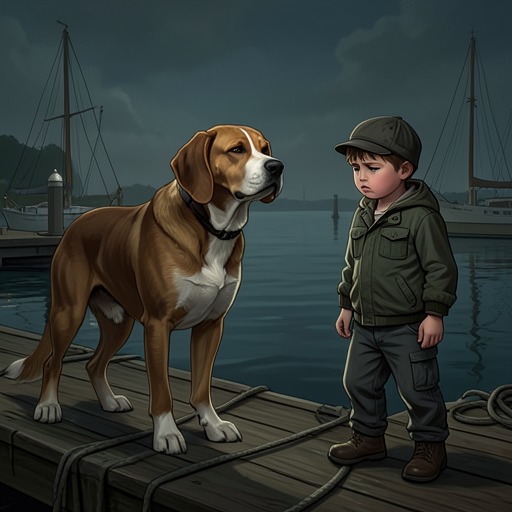
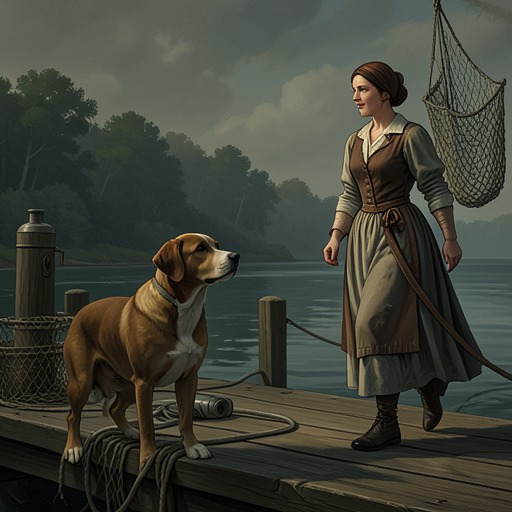
Clarity Mahoney is introduced as a baby visiting The Farm with her mother, Gloria. Her name becomes part of the family’s history there: after an earlier visit, Ethan and Hannah had spoken of Gloria and the baby many times, and the child’s name was Clarity, though Gloria often called her Clarity June. Buddy understands that he has a new responsibility toward her. When Clarity wanders close to the pond, with Hannah too far away to intervene quickly, he recognizes that the baby needs watching. Protecting her becomes his purpose.
That purpose begins in small, vivid acts of attention. Buddy remembers Clarity crawling beneath the bird feeder and eating fallen seed, an infraction he finds difficult to manage because she is a child rather than a squirrel. He barks, and Gloria, who had been lying facedown on a towel, responds angrily. The episode shows the difference between recognizing a danger and having authority over the person at risk: Buddy can warn, but the adults decide what happens next. His watchfulness nevertheless establishes the pattern that will govern his later lives with Clarity.
Recognition and Choosing Molly
Years later, Buddy has been reborn as Molly and is living at Jennifer’s house when Clarity arrives with Trent. Molly recognizes her by scent before she understands how Clarity could have found her. The recognition is immediate and physical: Molly leaps, spins, climbs on Clarity, and covers her with kisses. For Molly, this encounter confirms that her earlier purpose—to watch over Clarity—has continued beyond death and rebirth. Clarity, however, says that her mother will not let her have a dog and that she has come for Trent.
The apparent separation does not last. When Molly is shut in the yard, she becomes desperate, barking at the closed gate and unable to understand why Clarity has left. Clarity returns, drops to her knees, and Molly rushes into her arms. Jennifer and Trent are behind her as Clarity insists that Molly chose her, and she is taking the puppy home. Trent drives while Clarity sits in the back with Molly and Rocky. The scene turns the reunion into a choice: Molly’s attachment is not merely a feeling Clarity notices; she acts on it despite the obstacle posed by her mother’s rule.
Childhood, Secrecy, and Conflict
At home, Clarity’s care for Molly is shaped by secrecy and constraint. She leaves the puppy in the basement for long stretches, blocking off the small space beneath the stairs, then returns to feed and clean up after her before going back to school. Molly recognizes the routine as an echo of Ethan’s school days and dislikes being left alone. At night, Clarity practices keeping her quiet behind boxes: barking brings a sharp reprimand, while sitting silently earns a treat. The arrangement lets Clarity keep Molly hidden, but it also makes their closeness depend on Molly’s learning to wait quietly just beyond the barrier.
Molly also witnesses Clarity’s distress about food and her body. After Clarity weighs herself and reacts angrily to the number on the bathroom scale, she kneels by the water bowl and vomits. Molly senses her anguish and tries to comfort her by wagging, climbing on her, and licking her. The episode does not make Clarity’s struggle disappear; it shows Molly registering pain that Clarity does not openly explain to her. Her response is instinctive care, offered even when she cannot fully understand what is wrong.
The conflict with Gloria eventually becomes explicit. Clarity tells Gloria that she will say she lied about going to school and had actually been skipping, so that Gloria will not be blamed; in return, she asks to keep Molly. She makes the offer while Gloria is looking at her and Clarity is breathing hard. Her plea joins two loyalties—protecting her mother from legal trouble and keeping the dog she has chosen—in a single risky bargain. Earlier, at seventeen, she had also made clear that she was not supposed to drink champagne when Gloria proposed a catered Christmas party. These moments show a young person negotiating adult decisions while trying to preserve her own boundaries and attachments.
Love, Purpose, and Later Life
Molly’s care for Clarity becomes part of a larger question about the dog’s purpose. While playing all day with Del, a boy whose dark hair reminds Molly of Ethan, she realizes she has not seen CJ since breakfast. The discovery makes her feel like a bad dog and leads her to wonder whether loving Clarity is a new purpose or part of the same purpose that once bound her to Ethan. The question does not diminish either relationship; it enlarges the idea of devotion from one fixed bond into a continuing capacity to love and protect.
In Toby’s later life, Clarity appears again as an adult working in the hospice building. She moves from room to room, talking with and sometimes hugging patients, while Toby stays at her heels. When she leaves for the night, he often remains beside someone who needs him, and relatives reach for him to hold them. Clarity’s work and Toby’s comfort become parallel forms of care: she meets people through conversation and touch, while he offers his presence, even when closeness is uncomfortable for him. She calls him a good dog, a phrase that affirms the work they share.
Ending and Continuing Bond
Clarity tells Toby that she is going to leave him. She says she has had the good things this life can offer and is weary of the bad things ahead; she wants to be with her husband. Her regret is leaving her friends, and she names Toby as one of them. She also tells him that he is loved and cared for, and asks him to be with her in her final moments so that she will not be afraid. In comparing Toby’s gentleness to Molly and his self-assurance to Max, she recognizes the distinct dogs he has been while also addressing the companion before her now.
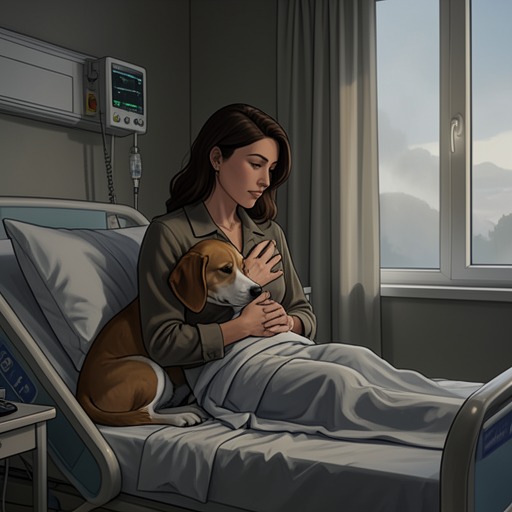
On a clear spring afternoon, Fran sits with Clarity, while Toby rests his head on her chest and her hand strokes his fur. When her hand stops, Fran moves closer and takes it; Clarity gradually lets go of life, and Toby’s girl dies with Fran beside her and Toby present. Toby then remembers her as baby Clarity at the dock, calling him Bubby, and as the child who once came with Trent to take him home. He recalls, too, how she held him against her chest for warmth when he was Max. Those memories make the relationship more than a sequence of separate dog lives: Clarity’s recognition, choosing, embraces, and care persist as the human counterpart to Toby’s repeated devotion.